Qualify, book and hand over: turning conversations into test drives, and warm buyers into human handovers
The stage where an enquiry stops being a name in a queue and becomes a booked test drive with a written brief waiting for the right consultant.
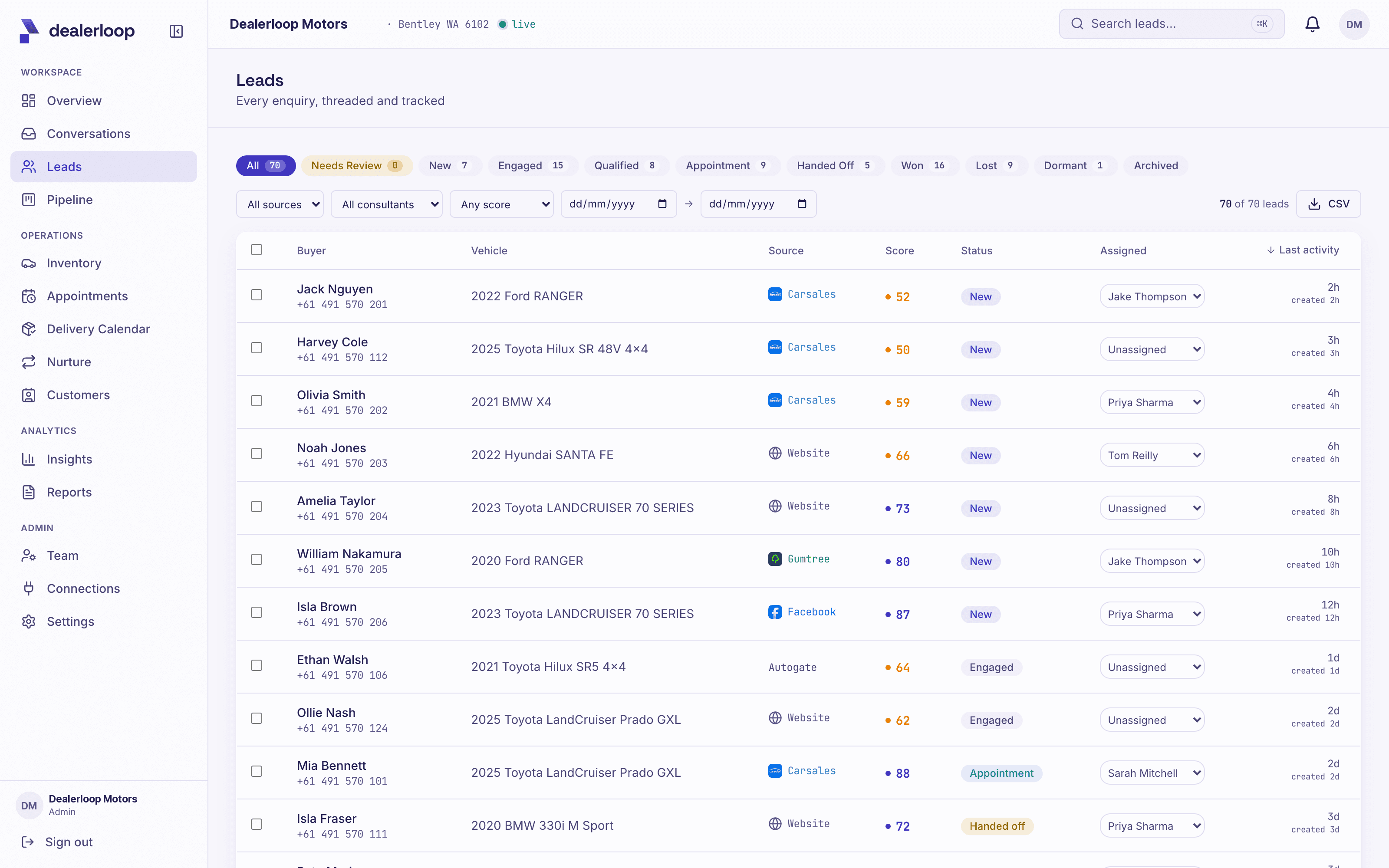
A buyer who has just asked to come in on Saturday is worth protecting. Yet this is exactly where dealerships leak deals: forms with ten required fields kill the reply, appointments quietly evaporate, and when a salesperson finally picks up the thread they open with "so what are you after?" as if the last three days never happened.
The qualify, book and hand over stage is built to close those gaps. Each capability does a useful job on its own. Together they take a warm conversation and deliver it to a human with the full story intact. Here is how the stage runs end to end.
Qualification that happens in conversation
Budget, timeframe, trade-in and finance get learned naturally, not interrogated. You define the questions you care about, and the AI works them into the conversation one at a time rather than front-loading a questionnaire nobody finishes.
As the customer answers, the detail accumulates on the lead as structured qualification data, with a lead score that firms up as intent does. Trade-in details, finance status and buying timeframe are captured in the customer's own words and summarised for staff, so nobody has to reconstruct the story later.
Test drives booked inside the chat
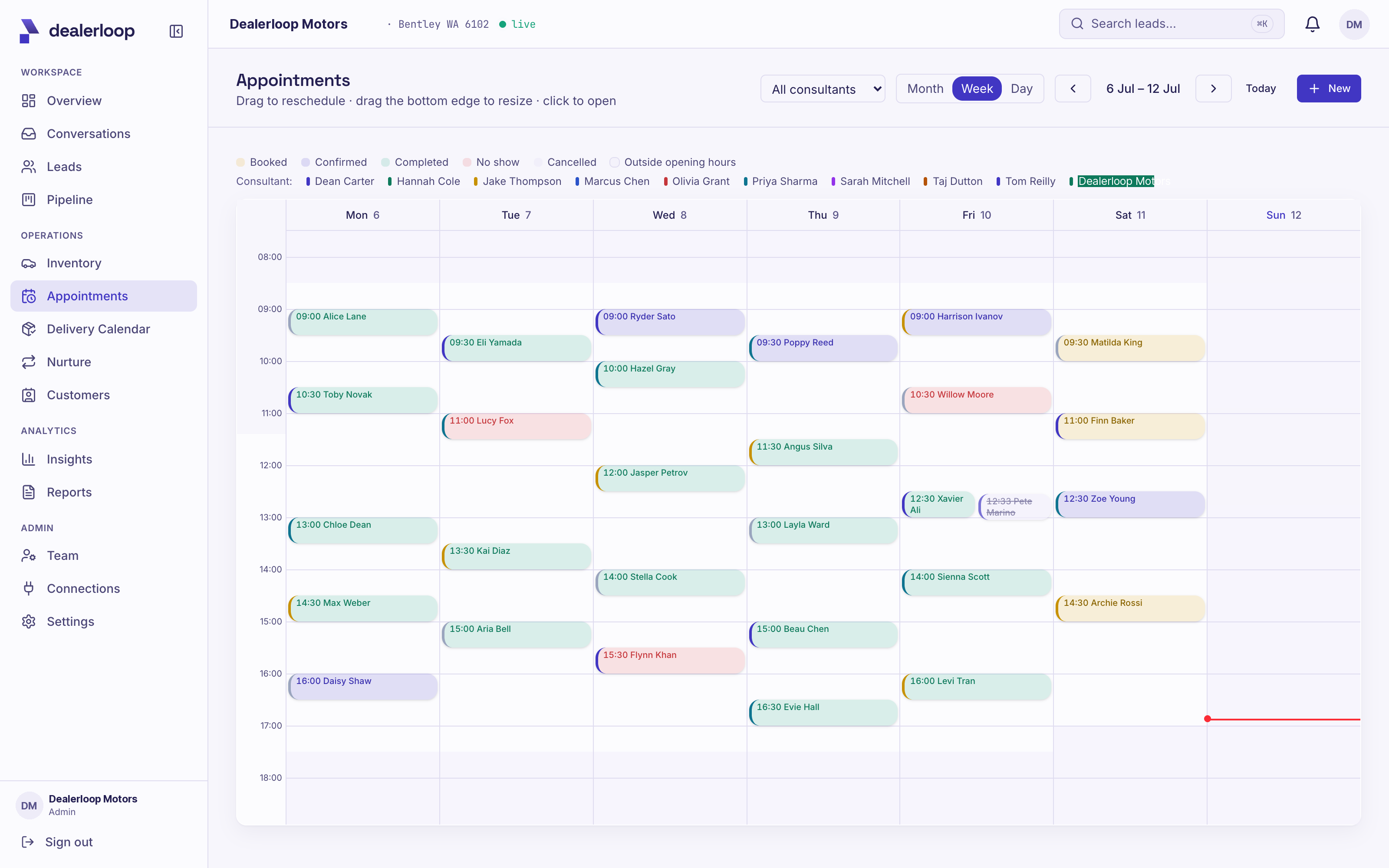
Every extra step between an eager "does Saturday work?" and a confirmed slot leaks buyers. So the booking happens where the conversation is. The AI proposes and agrees a time inside the thread, respecting your actual opening hours, then turns it into a calendar appointment assigned to a consultant and visible to the whole team instantly.
The customer gets a confirmation with the address and who to ask for. Changes and cancellations are handled by simply replying, no app, no phone tag. More on that flow in Test drives booked inside the chat.
No-shows get a graceful second chance
Around a third of booked appointments quietly disappear, and nobody chases them because it feels awkward. When an appointment is marked a no-show, the AI sends a friendly check-in with no guilt trip and an easy path to re-book. The customer replies with a time, and it re-books like any other appointment. Cancellations get the same warm treatment: acknowledged, then invited to find another slot. The awkward follow-up nobody wanted to make now happens every time. See No-shows get a graceful second chance.
Handovers with a written brief
This is the classic failure point: the AI or BDC warms the lead, then the salesperson starts cold. Not here. Handoff triggers are yours to set: a price negotiation, a finance conversation, a customer asking for a person, or the AI judging the lead is ready.
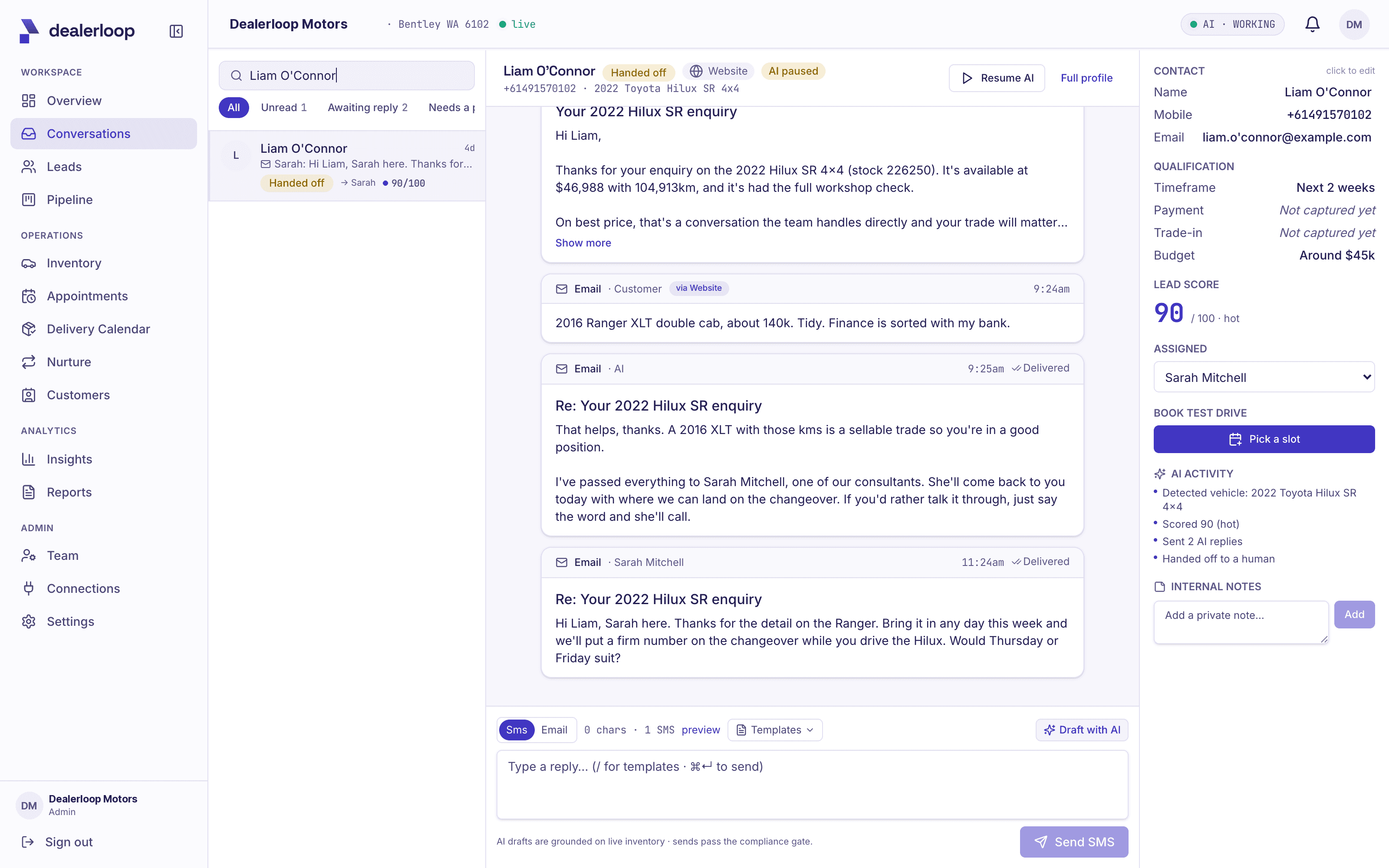
When a human takes over, they inherit the whole story. The assigned consultant receives a brief covering the vehicle, what the customer said about budget, trade-in and timing, and what to do next. The AI pauses itself on handoff, so two voices never talk over each other in one thread.
One inbox for the whole dealership
Conversations trapped in personal phones and mailboxes disappear when the salesperson does. Instead, every SMS and email conversation, AI and human, lives in one shared view. Filter by status, source, consultant or channel, open the full thread with the lead's context beside it, and reply in the same thread the AI used on either channel. Email replies thread correctly in the customer's mail client, and realtime updates mean a reply appears for everyone the moment it arrives, with no refresh. It is the same principle behind One customer, one thread.
Fair-share lead allocation
Lead distribution by ambush rewards the quickest cherry-picker, not the best closer, and managers referee it daily. Fair-share allocation ends that. Each consultant has a manager-set weight, and a weight of zero pauses them entirely. When a lead qualifies or books, it goes to whoever is furthest behind their fair share over a rolling 30-day window, preferring consultants on shift. Manual assignments sit on top and do not distort the automatic balance.
The compounding effect
Read one section at a time and each capability is a sensible fix. Read them in sequence and the point lands: an enquiry is qualified in conversation, booked against a real calendar, recovered if it slips, handed to a fairly chosen consultant with a written brief, and kept in one thread the whole team can see. Nothing gets dropped between the steps, because there are no gaps between the steps.
That is one stage of what Dealerloop does. See how it connects to the rest in everything Dealerloop does, or book a demo and we will walk your team through it on your own leads.
Frequently asked questions.
- How does Dealerloop qualify a lead without a form?
- You define the qualification questions you care about, such as budget, timeframe, trade-in and finance. The AI works them into the conversation one at a time instead of front-loading a questionnaire. Answers accumulate on the lead as structured data with a lead score that updates as intent firms up, and are summarised for staff in the customer's own words.
- What happens when a customer no-shows a booked test drive?
- When an appointment is marked a no-show, the AI sends a friendly, no-guilt check-in offering a new time the same day. The customer replies with a time and it re-books like any other appointment. Cancelled appointments get the same treatment: acknowledged warmly and invited to find another slot.
- How are warm leads shared across the sales team?
- Each consultant has a manager-set weight, and a weight of zero pauses them from allocation. When a lead qualifies or books, it goes to whoever is furthest behind their fair share over a rolling 30-day window, preferring consultants on shift. Manual assignments sit on top and do not distort the automatic fair share.
See what closing the loop is worth on your own numbers.