Run the dealership on it: reports, compliance and multi-rooftop control that hold up
The stage where the platform stops being a tool you check and becomes the system you run the business on: reports that speak dealer, Spam Act compliance by default, and group control priced for independents.
You can spend an afternoon in spreadsheets trying to prove which lead source paid for itself last month, and still not be sure. You can trust that nobody on the team ever texts a DNC number after hours. You can run two or three rooftops out of two or three logins and hope the numbers reconcile. Or the platform can do all of it, quietly, in the background, while you get on with selling cars.
This is the stage where Dealerloop stops being something you check and becomes the system you run the dealership on. Three capabilities, each useful alone, that compound when they run together.
Reports that speak dealer
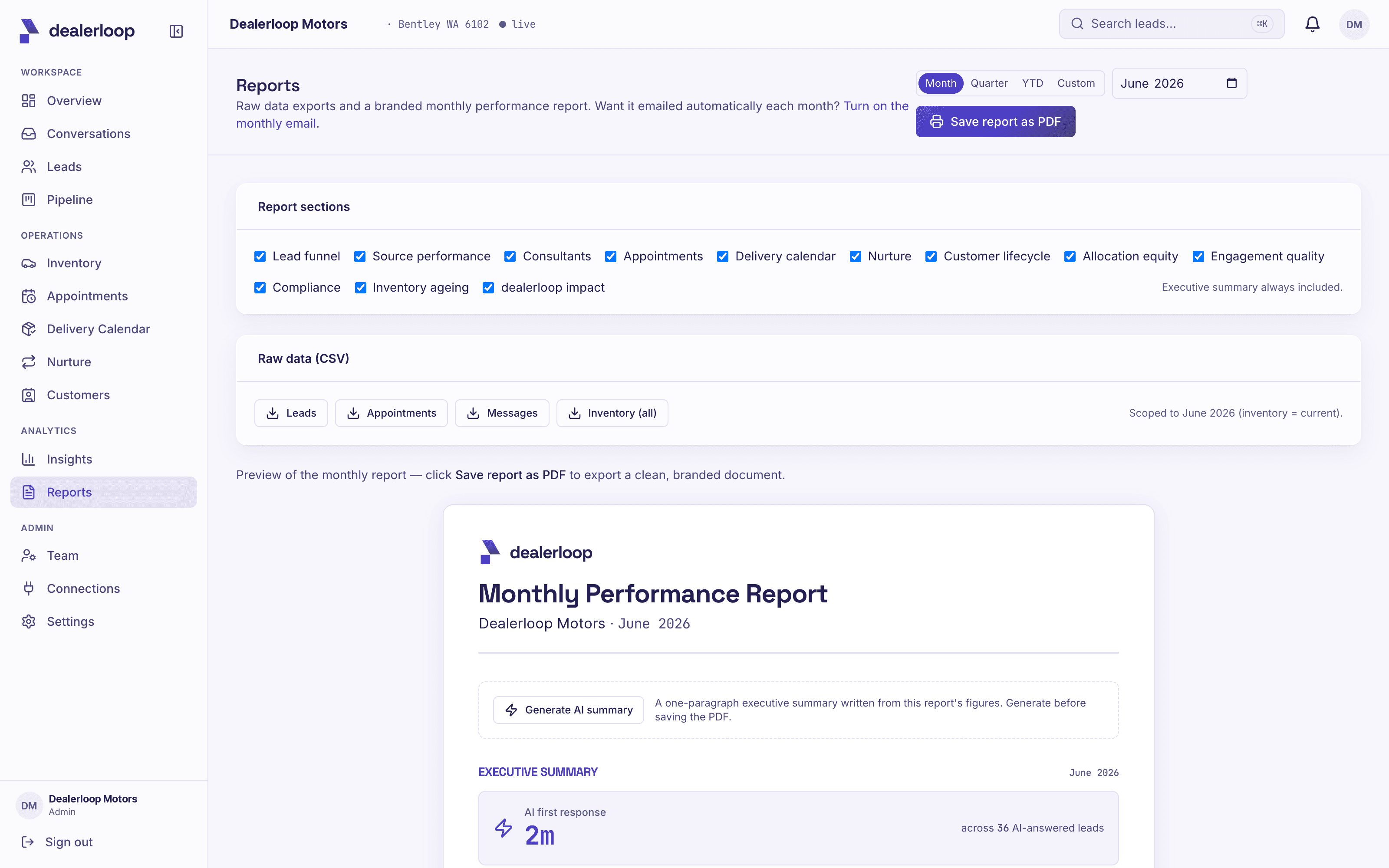
Most dealership reporting answers questions nobody asked and skips the one that matters: did this source pay for itself? Dealerloop builds a monthly report that covers the full lifecycle, so the answer is already sitting there. Lead volume by source. First-response speed. Conversation outcomes. Appointments. Wins with sale values attached. Delivery throughput.
Because sale prices attach to won leads and deliveries, return on ad spend is computable per source. Not estimated, computed. You can see which channel is buying you gross and which one is buying you noise, without compiling anything.
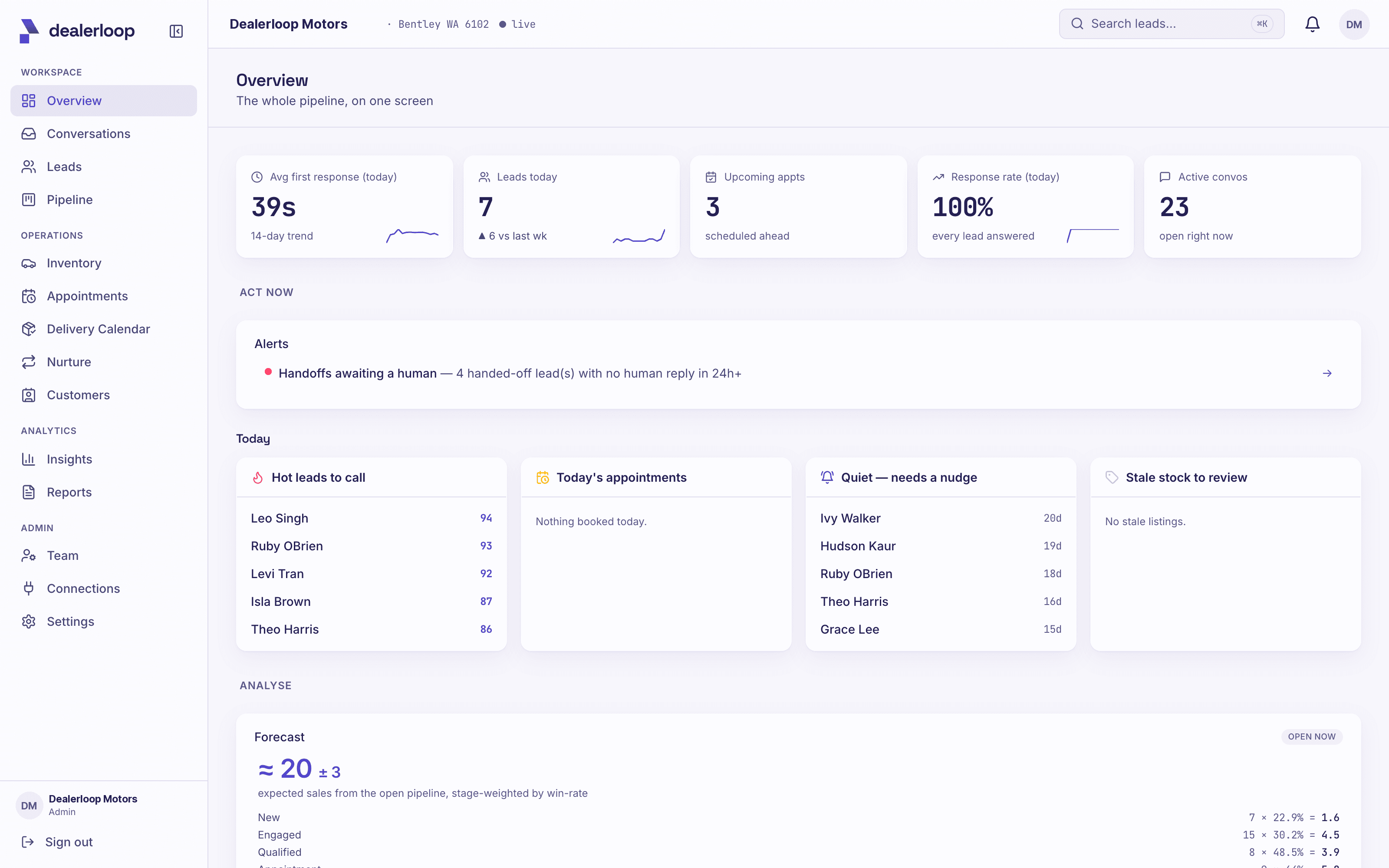
Between monthly reports, the picture stays live. A daily digest emails the morning's state of play with new leads attached, and dashboards update in real time in between. The reporting also reaches down the funnel into the delivery stage where won deals stop leaking, so the number you celebrate at handover is the same number the report shows.
Spam Act compliance by default
One staff member texting a number on the do-not-contact list is a regulatory problem, and manual compliance does not scale past the first busy Saturday. So Dealerloop enforces the rules in the engine, not in a training session and a hope.
STOP, unsubscribe and their variants are honoured immediately across both SMS and email, and recorded in a suppression list that every future send checks before it goes out. Quiet hours are enforced per dealer timezone: outbound touches hold overnight and release the moment the window opens. Every commercial message carries a functional opt-out, with cadence rules so the footer appears as required without nagging the customer on every single text.
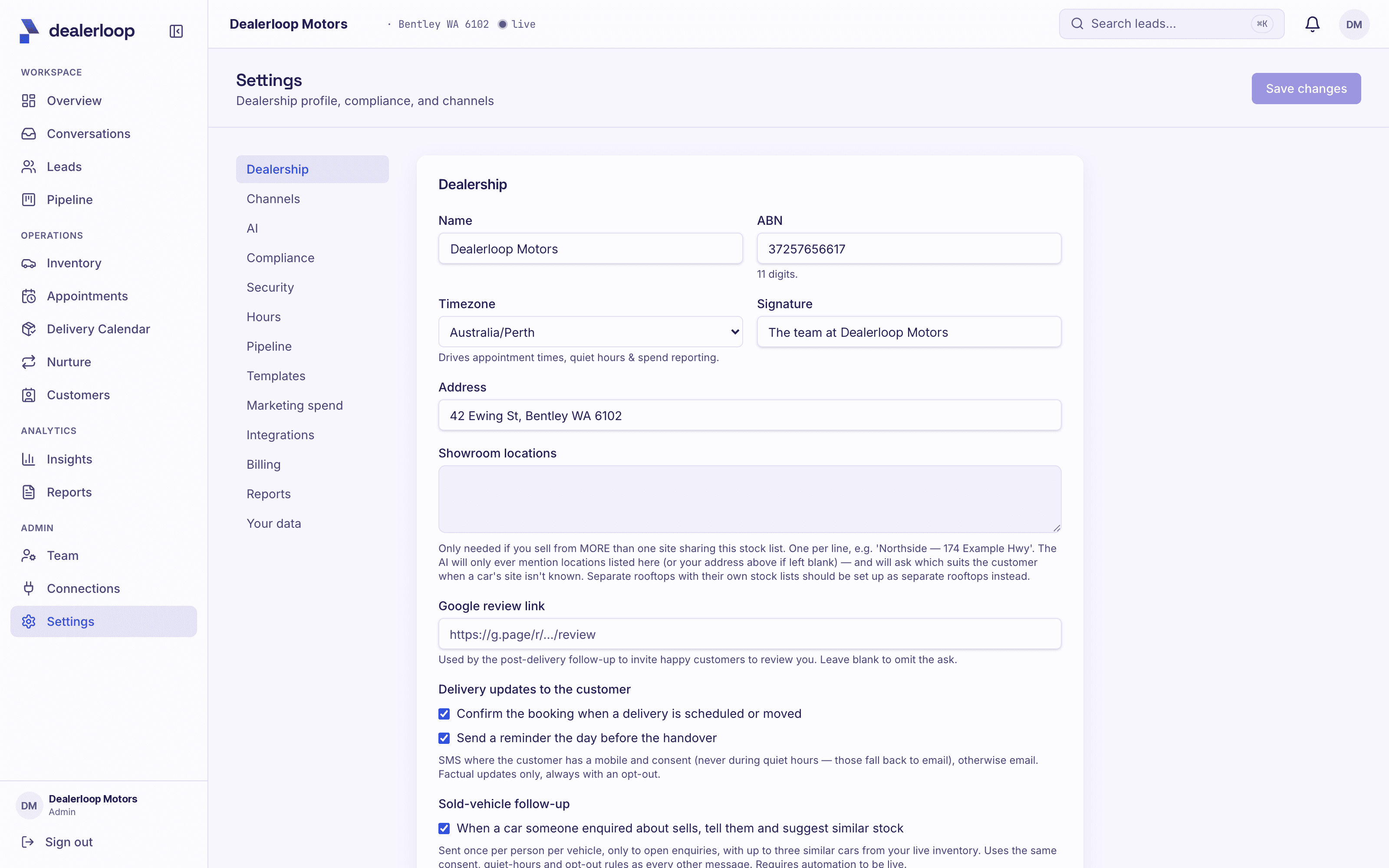
The point is that compliance stops being a person's job. It becomes a property of the system, applied the same way at 9am on a weekday as it is at 11pm on a public holiday.
Built for groups, priced for independents
Group tooling usually assumes a national franchise budget. Independents with two or three rooftops get nothing that fits how they actually operate. Dealerloop is built for both.
Rooftops that share a stock list run as locations under one dealership. Rooftops with separate stock run as linked dealerships in a group. Either way, one login works across every rooftop a person belongs to, each with its own teams, settings and AI personas. A used-car yard and a prestige showroom can sound like different businesses to a customer while a manager moves between them in a single click.
Group onboarding invites a whole group in one flow, and group views roll up performance across every rooftop, so you can compare sites on the same terms.
Where it compounds
Separately, each of these solves a headache. Together they change how the business runs. Compliance runs clean, so the reporting you trust is built on messages that were allowed to send. The reporting is per source and per rooftop, so a group can see which site and which channel is earning its keep. And because it all sits on one login with per-rooftop personas, the same discipline applies whether you run one yard or five.
This stage sits on top of everything upstream: every lead source arriving through one front door, one customer kept to one thread, and the recovery of the ones that got away. You can see everything Dealerloop does in one place, but this is the layer that lets you actually run on it.
Book a demo and we will show you your own numbers, by source and by rooftop, the way you would read them on the first of the month.
Frequently asked questions.
- How do dealers work out return on ad spend per lead source?
- Dealerloop attaches sale prices to won leads and deliveries, so return on ad spend is computable per source. The monthly report shows lead volume, first-response speed, outcomes, appointments, wins with sale values and delivery throughput, so you can see which source paid for itself without compiling anything.
- How does the platform keep dealership messaging compliant with the Spam Act?
- Compliance is enforced by the engine, not by staff training. STOP, unsubscribe and their variants are honoured immediately on both SMS and email and recorded in a suppression list every future send checks. Quiet hours are enforced per dealer timezone, and every commercial message carries a functional opt-out with cadence rules for the footer.
- Does Dealerloop work for a small dealer group with two or three rooftops?
- Yes. Rooftops sharing a stock list run as locations under one dealership; rooftops with separate stock run as linked dealerships in a group. One login works across every rooftop a person belongs to, with per-rooftop teams, settings and AI personas, plus group views that roll up performance across sites.
See what closing the loop is worth on your own numbers.