One upload, no double entry: read the deal straight off the contract
The signed contract already holds every detail of the deal. Dealerloop reads it once so nobody re-types the customer, the car and the trade into a second and third system.
The deal is done, the contract is signed, and now the typing starts. The salesperson keys the customer into one system. Someone in the business office re-keys the vehicle into another. Delivery re-enters the trade-in into a third. Three people, three screens, and somewhere in there a mobile number loses a digit, a VIN gets a transposed character, and a colour goes in as "blue" instead of the build code. Every re-key is a fresh chance to introduce an error into a record you will lean on all the way to handover.
The frustrating part is that the source of truth already exists. It is the signed contract sitting in front of the salesperson. Every fact the delivery needs is on that page. The problem was never a lack of data. It was that the data had to be transcribed by hand, over and over, into systems that could not read the document.
Upload once, and the deal reads itself
Dealerloop starts the delivery from the document you already have. The salesperson uploads the signed contract, and the details are read out of it automatically. Not a form to fill in, not a set of fields to copy across: the contract goes up, and the deal comes back structured.
What gets captured is the whole shape of the deal. The customer comes through with name, mobile and email. The sold vehicle comes through with year, make, model, VIN, stock number and colours. Any trade-in is captured alongside it. These are the exact details that used to be typed three times by three people, now read once from the one document that everybody was copying from anyway.
Data entering once, at the source document, is the whole point. From there it flows everywhere the delivery needs it, rather than being re-entered at each stop.
Matched where it exists, created cleanly where it doesn't
Reading the contract is only half the job. The other half is putting those details somewhere sensible without creating a mess of duplicates. A customer who bought before, or who came in as an earlier enquiry, should not become a brand-new record every time a contract lands.
So captured details are matched to existing records where they exist and created cleanly where they do not. If the buyer is already known to you, the deal attaches to the record you already have. If they are new, a clean record is built from the contract. This is the same discipline that keeps one customer on one thread rather than scattering a single buyer across three half-finished profiles.
Crucially, everything captured this way is tagged with provenance. The system knows a detail came off the uploaded contract, which means that when your DMS data arrives later, the DMS record can win. You get the speed of reading the contract on day one without the contract capture overwriting the system of record down the track. It is a quick start that knows its place in the order of things.
What that means from won deal to handover
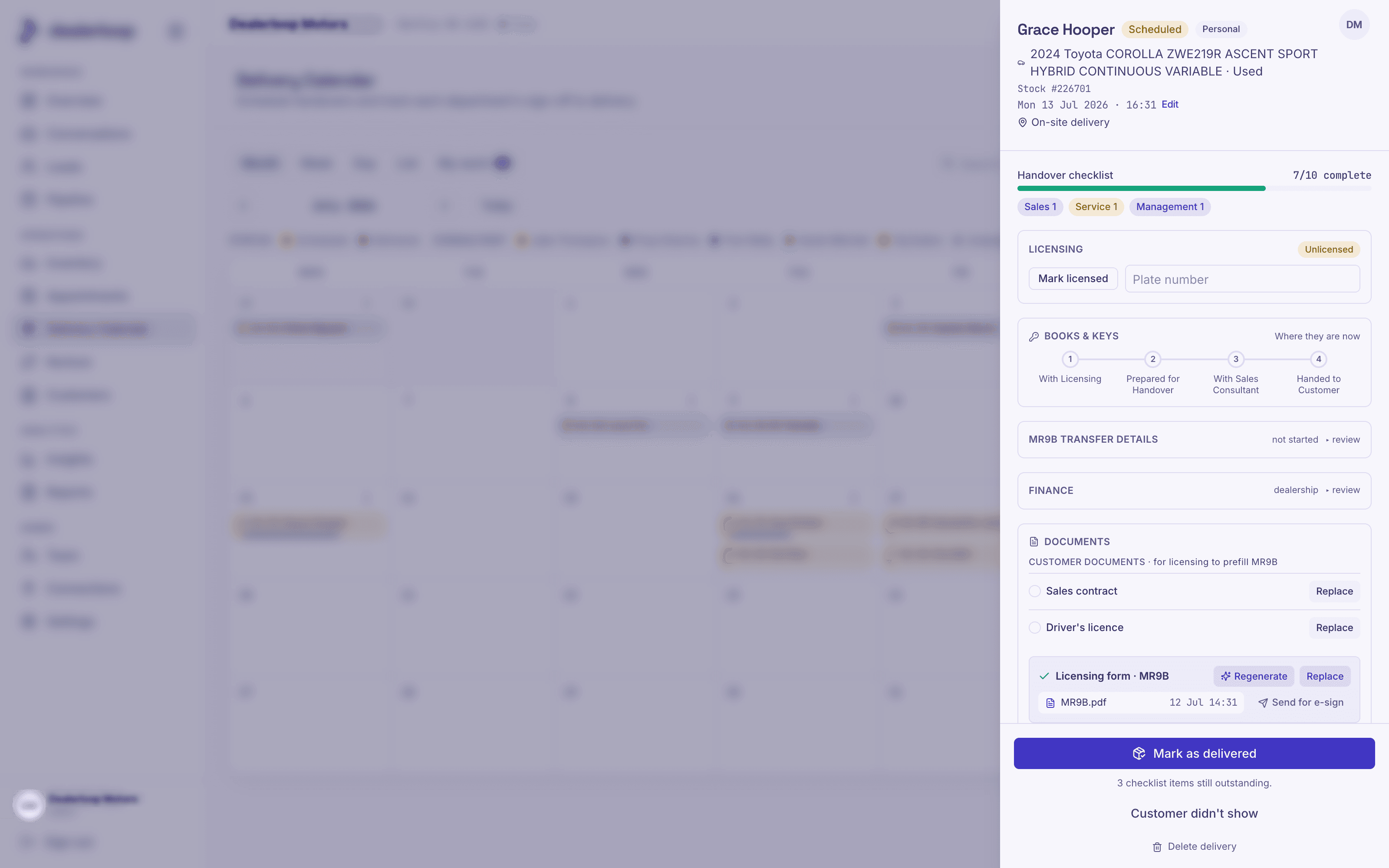
Once the contract has been read, the work that follows the sale prefills from the same capture. The delivery record is populated from it. The licensing paperwork prefills from it too, so the details on the forms are the details off the contract, not a fresh round of typing that reintroduces the errors you just avoided. When the paperwork is ready to sign, it flows into the process where licensing gets e-signed from the couch rather than holding up handover.
The documents themselves are stored privately, with access-controlled links, so the contract and the paperwork are kept in one place and shared deliberately rather than emailed around as loose attachments.
Day to day on the floor, the change is simple. The salesperson stops being a data-entry clerk for the business office and the delivery desk. One person uploads one document, and the customer, the car and the trade travel to every step that needs them without another keystroke. Fewer typos means fewer chased-down corrections in the silent window between deposit and delivery, and a delivery record you can actually trust.
This capability is one link in the chain that runs a deal from first enquiry to handover. To see how it sits alongside everything Dealerloop does, or how the platform runs a dealership's leads from first enquiry to next car, the rest of the picture is worth a look.
Want to see a signed contract turn into a ready delivery record in one upload? Book a demo and bring a sample deal.
Frequently asked questions.
- Can Dealerloop extract customer details from a car sales contract automatically?
- Yes. The salesperson uploads the signed contract and the details are read out of it automatically: the customer's name, mobile and email, the sold vehicle's year, make, model, VIN, stock number and colours, and any trade-in. There is no separate form to key in.
- Will uploading a contract create duplicate customer records?
- No. Captured details are matched to existing records where they exist and created cleanly where they do not. So a returning buyer attaches to the record you already have rather than becoming a new one.
- What happens when the DMS has different data later on?
- Everything captured from the contract is tagged with provenance, so the system knows where each detail came from. That means later DMS data can win, giving you a fast start on day one without overwriting your system of record down the track.
See what closing the loop is worth on your own numbers.