A photo page for every car, one text away
When a customer asks to see more, 'come in and have a look' loses the deal. Here is how Dealerloop turns that request into a clean, hosted gallery in the thread, and a buying signal you can act on.
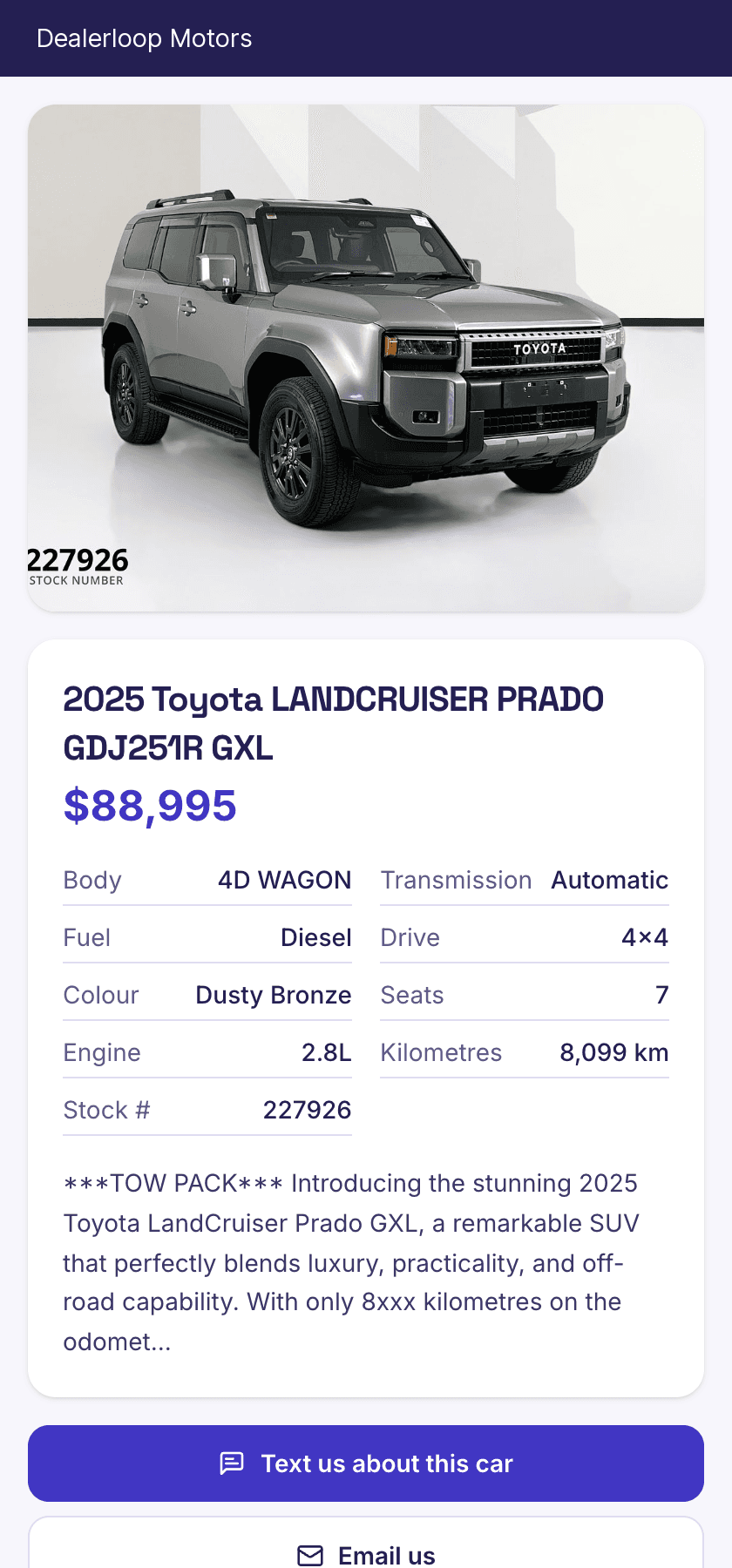
A customer texts your dealership at 9pm: "Are there more photos of the silver Hilux?" It is a simple question with a lot riding on it. Answer well and you have a warm buyer leaning in. Answer badly and they scroll on to the next listing.
The trouble is that the usual answers are weak. MMS is unreliable in Australia, so photos sent by picture message often arrive late, compressed, or not at all. And "come in and see it" is not an answer to "can we see more photos?" It asks the customer to do the work at the exact moment they were ready to be shown something.
Dealerloop closes that gap. Ask for photos and the AI texts back a fast, clean page with the full gallery, specs and price. No app, no attachment that fails to land, just a short link that opens straight to the car.
What the customer actually gets
Every available vehicle has a hosted page built from the live stock record. That page carries the full gallery, the price, the kilometres and the complete specification. Because it is generated from the same record that runs your inventory, it shows what is actually true about the car right now.
The moment a customer asks for photos or details, the AI shares that page as a short link inside the conversation. It works day and night, and it works without a salesperson having to dig through a folder of images and hope MMS behaves.
There is a quiet but important safeguard here. Pages only exist for available stock at live dealerships. When a car is gone, its page is gone, so an old link can never advertise a vehicle you can no longer sell. This is the same live-stock discipline behind Dealerloop's inventory that keeps itself current: the AI only ever points customers at real cars.
The signal you didn't have before
Here is where the mechanics earn their keep. When a customer opens their link, that view is recorded on the lead's timeline. Your salesperson can see it.
That single event changes what a lead means. "Just browsing" is invisible. A recorded link-open is visible intent, a real buying signal telling the salesperson which customer just leaned in and which car they leaned into. It is the difference between guessing who to call next and knowing.
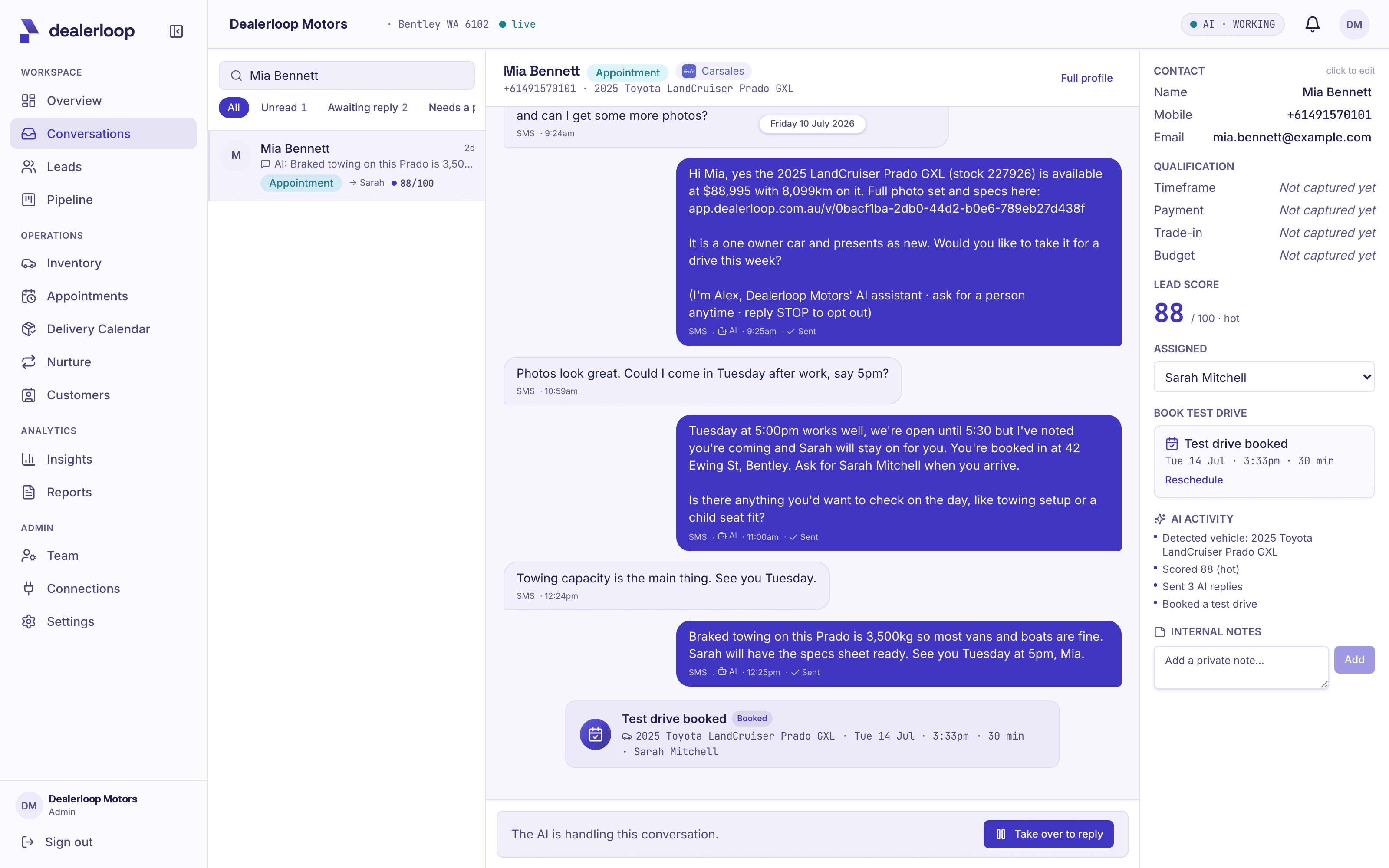
Everything the customer does sits in the one place, because Dealerloop keeps one customer in one thread rather than scattering their activity across separate leads and inboxes. The enquiry, the photo request, the link, the open: it reads as a single story your team can pick up mid-conversation.
What it means on the floor
Day to day, this takes a task off your salespeople and turns it into an advantage. Nobody is fumbling with picture messages that may not send. The customer gets an answer in seconds, at any hour, that looks the way your stock deserves to look.
And the follow-up practically writes itself. A salesperson opens the day, sees who opened a vehicle page overnight, and calls the buyer who has already shown their hand. That is grounded, honest engagement built from your actual stock, working while the showroom is dark. It pairs naturally with the way Dealerloop lets test drives get booked inside the chat, so an answered photo request can carry straight through to a confirmed slot.
This is one capability among many. See how it fits with everything Dealerloop does, then book a demo and watch a real stock record become a page, one text away.
Frequently asked questions.
- How can a dealership send car photos to a customer by text?
- Dealerloop's AI shares a short link to a hosted vehicle page the moment a customer asks for photos or details. Instead of relying on MMS, which is unreliable in Australia, the customer opens a clean page with the full gallery, price, kilometres and complete specification, on any phone and at any hour.
- Where do the photos and details come from?
- Every available vehicle has a hosted page generated from the live stock record, so the gallery, price, kilometres and specs reflect what is actually true about the car right now. Pages only exist for available stock at live dealerships, so an old link can never advertise a car that has already sold.
- How does the dealer know if a customer looked?
- When a customer opens their link, that view is recorded on the lead's timeline. It is a real buying signal, showing the salesperson which customer just leaned in and which car they were looking at, so follow-up goes to the warmest buyer first.
See what closing the loop is worth on your own numbers.